
Yes, Diani Beach is generally used as a public shoreline. A hotel may control its buildings, pool, loungers, gardens and access route, but that does not make the entire beach in front of it a private hotel facility. In practice, visitors still need a lawful public access point and should respect property boundaries.
The useful question is not only “is the beach public?” It is also “where can I enter without crossing private land, and what will the tide be doing when I arrive?”
The simple distinction
| Area | What visitors should assume |
|---|---|
| Wet sand and active shoreline | Generally shared public space, subject to environmental and safety rules |
| Hotel garden, pool and loungers | Private facilities for guests or paying visitors unless the property says otherwise |
| Hotel gate or pathway | Not automatically a public right of way |
| Public access road or path | Appropriate entry point when clearly designated and open |
| Marine protected area | Public access may still involve KWS rules or fees for specific activities |
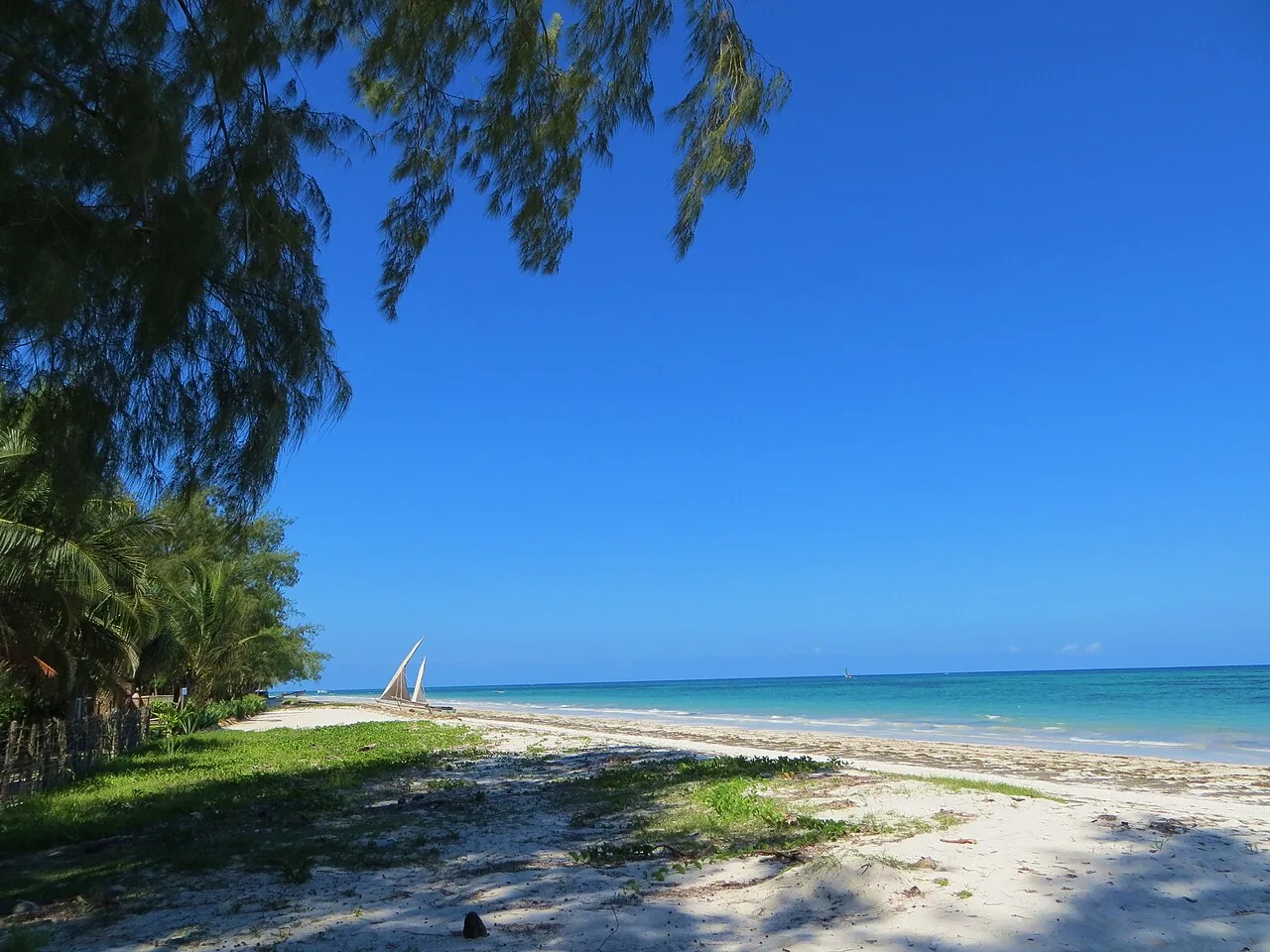
Diani Beach. Photo by FredD, resized and converted to WebP, CC BY-SA 3.0.
Public beach does not mean every access route is public
Diani is a long resort corridor. Some sections are reached through public roads and paths, while others sit in front of hotels or private plots. Do not walk through a hotel lobby or garden simply because the shoreline beyond it is public. Ask for the nearest recognised beach-access point or use a venue that openly welcomes day visitors.
If you plan to drive, confirm parking before setting out. Avoid blocking entrances, residential roads or emergency access. A taxi or tuk-tuk can be simpler when parking is uncertain.
Hotel facilities are separate from the shore
Being on the sand does not grant access to a resort’s chairs, towels, washrooms, pool or security-controlled areas. Some hotels sell day passes or accept outside restaurant guests, but the terms vary. Contact the property directly and ask what the pass includes.
This distinction also works the other way. Hotel guests can walk along the shared shoreline beyond the immediate property, provided they respect protected areas, local instructions and other beach users.
Tides change how the public space feels
At low tide, the water can pull far back and expose reef flats, pools and rough surfaces. At high tide, the usable strip of sand can become narrower. The effect varies by location and by the lunar cycle.
A longstanding Diani Beach forum explanation describes prominent high and low tides along the fringing reef and notes that beach quality varies by section. More recent reviews likewise mention sea urchins and the need for suitable footwear when walking exposed areas.
Beach sellers and respectful boundaries
Visitors may be approached by people offering excursions, souvenirs or guiding. Many are earning a legitimate living, but you are not obliged to buy. A brief, polite refusal is usually clearer than a long conversation. Do not share your room number or hand over money without understanding the service and operator.
When booking an activity, use a traceable business, request written inclusions and verify safety equipment. Do not allow pressure to replace basic checks.
Safety and environmental etiquette
- Follow lifeguard, hotel and local safety advice before swimming.
- Wear reef shoes where exposed reef or sea urchins are reported.
- Do not remove shells, coral or living marine animals.
- Keep distance from turtle nesting areas and never use bright lights around nests.
- Carry litter out and avoid single-use plastics where practical.
- Ask before photographing people, vendors or fishing activity.
- Treat wildlife sightings as uncertain and avoid operators that chase animals.
The Kenya Wildlife Service page for Diani Chale explains the ecological importance of coral reefs, seagrass, mangroves and turtle habitat. Public use comes with a responsibility to protect that environment.
What recent travellers noticed
Recent Tripadvisor reviews praise Diani’s white sand and warm water, but several also mention strong tidal change and frequent approaches from sellers. These reports are subjective. Their value is in showing that the beach can be beautiful and socially active at the same time.
Frequently asked questions
Can a hotel stop me walking along Diani Beach?
Hotels manage their property and facilities, while the active shoreline is generally shared. Access disputes can be location-specific, so use recognised public paths and follow lawful local directions.
Can I use a hotel’s loungers if I buy lunch?
Not automatically. Ask the hotel whether restaurant guests receive beach, pool or lounger access, or whether a day pass is required.
Is it safe to walk the beach at night?
Conditions vary. Avoid isolated sections, ask your accommodation for current local advice and arrange transport rather than making assumptions after dark.
Are there entrance fees for Diani Beach?
Ordinary shoreline access is generally free. Marine-park activities, managed sites, parking, day passes and organised excursions may have separate charges.
Related Kenya Coast guides
This practical guide was checked on 4 October 2026. Access arrangements and local rules can change, so confirm the exact entry point before travel.